Choosing the right vacuum cleaner often feels like navigating a maze of options, each promising a cleaner home. The core dilemma for many homeowners today revolves around a fundamental choice: corded or cordless? Once a clear-cut decision favoring the robust power of corded models, advancements in battery technology have blurred the lines, making cordless vacuums formidable contenders. Understanding the nuances of each type is crucial to selecting a device that truly fits your cleaning habits, home size, and specific needs. This article will delve into the technical status, advantages, disadvantages, and critical purchasing considerations for both corded and cordless vacuum cleaners, guiding you toward an informed decision that ensures sparkling floors and clean air.
Understanding Vacuum Cleaners: A Brief Overview
The invention of the vacuum cleaner in the early 1900s revolutionized household cleaning, transforming a laborious chore into a more manageable task. For decades, corded models dominated the market, known for their powerful motors and consistent suction. These traditional vacuums, typically found as upright, canister, or stick designs, connect directly to a power source, offering uninterrupted cleaning.
In recent years, however, cordless vacuum cleaners have emerged as a rapidly growing and popular alternative. Driven by advancements in battery technology, these flexible devices, often in stick or handheld variants, have gained significant traction, especially in urban apartments and among young families. Many modern cordless models now boast impressive suction and smart features, prompting a significant shift in consumer preferences. For instance, in 2018, Dyson notably shifted its focus entirely to battery-driven vacuum development, signaling a clear direction for the industry.
Corded Vacuums: Power, Capacity, and Reliability
Corded vacuum cleaners remain a staple in many households due to their inherent strengths, particularly for demanding cleaning tasks.
Unwavering Suction Power
|
Our Picks for the Best Vacuum cleaner in 2026
As an Amazon Associate I earn from qualifying purchases.
|
||
| Num | Product | Action |
|---|---|---|
| 1 | Eureka Lightweight Powerful Upright Vacuum Cleaner for Carpet and Hard Floor, PowerSpeed, New Model,Blue,black/New Model |

|
| 2 | MONSGA Cordless Vacuum Cleaner, 45KPa 400W Stick Vacuum for Home, 50Mins Anti-Tangled Vacuum Cleaner with Charging Dock, Light-weighted Handheld Vacuum for Pet Hair/Carpet/Floor, LED Touch Display,MV3 |
|
| 3 | Shark NV352 Navigator Lift Away Upright Vacuum, Hepa Filter, Anti-Allergen Technology, Swivel Steering, Ideal for Carpet, Stairs, & Bare Floors, with Wide Upholstery & Crevice Tools, Lavender |
|
| 4 | Eureka NEU10AE5 Powerful Bagless Upright Vacuum Cleaner Carpet and Floor, AirSpeed Ultra-Lightweight Vacuum Cleaner, w/ Replacement Filter, Blue |
|
| 5 | Bissell CleanView Compact Turbo Upright Vacuum with Quick Release Wand, Full Size Power, Compact Size for Apartments & Dorms, 3437F |
|
| 6 | Bissell CleanView Compact Upright Vacuum, Fits in Dorm Rooms & Apartments, Lightweight with Powerful Suction and Removable Extension Wand, 3508 |
|
| 7 | Eureka PowerSpeed NEU181A Upright Vacuum Cleaner For Daily Cleaning for Pet-Owning Households , 5-Height Adjustment-Powerful Suction-Large Dust Cup-Pet Turbo Brush,Suitabe For Carpets & Hard Floors |
|
| 8 | Shark Upright Vacuum, Navigator Lift-Away Deluxe with Large Dust Cup Capacity, HEPA Filter, Swivel Steering, Upholstery Tool & Crevice Tool, Blue, NV360 |
|
| 9 | UNINELL HOME Cordless Vacuum Cleaner, 45,000Pa/450W Stick Vacuum Cleaners for Home, 60 Mins Runtime, Self-Standing, Detachable Battery, Anti-Tangle Brush, Lightweight Wireless Vacuum for Pet Hair |
|
| 10 | Cordless Vacuum Cleaner, 550W 45kPa 65Mins Vacuum Cleaners for Home with LED Display, Self-Standing Stick Vacuum with Anti-Tangle Brush, Rechargeable Vacuum Cordless for Pet Hair/Carpet/Floor |
|
One of the most significant advantages of corded vacuums is their consistent and strong suction power. Directly connected to a mains power supply, these vacuums can utilize more powerful motors, ensuring deep and thorough cleaning. This makes them exceptionally effective for tackling stubborn dirt, deeply embedded debris in carpets, and homes with high-traffic areas or abundant pet hair. Unlike battery-powered models, their performance does not diminish as they run, maintaining peak efficiency throughout your cleaning session.
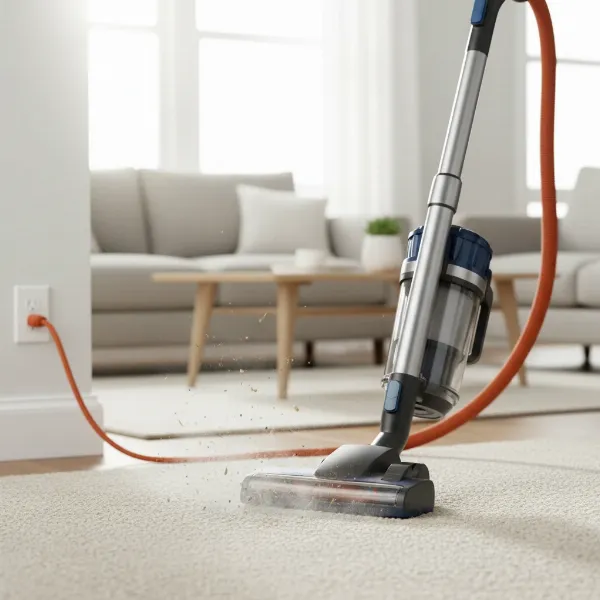 A powerful corded upright vacuum cleaner deeply cleaning a carpet in a living room.
Unlimited Runtime
With a continuous power source, corded vacuums offer unlimited runtime. This feature is invaluable for larger homes, extensive cleaning projects, or situations where you prefer to clean an entire house in one go without interruptions. You never have to worry about the battery dying midway through a task, providing peace of mind and efficient workflow for comprehensive cleaning sessions.
Generous Dust Capacity
Corded vacuums typically come equipped with larger dustbins or bags, often ranging from 1.5 to 6 liters in capacity. This substantial capacity means less frequent emptying, allowing you to clean more of your home before needing to dispose of collected dirt and debris. This is particularly convenient for bigger houses or environments that accumulate a lot of dust and pet hair.
Durability and Cost-Effectiveness
Generally, corded vacuums are known for their robust build and longer lifespan, often lasting 8-10 years or more with proper maintenance. Their simpler mechanics, without the reliance on degradable batteries, contribute to their durability. Furthermore, corded models tend to have a lower upfront cost compared to similarly featured cordless units, offering better long-term value and fewer potential replacement costs for components like batteries.
Potential Drawbacks
Despite their advantages, corded vacuums come with their share of inconveniences. Their operation is restricted by the length of the power cable, necessitating frequent unplugging and re-plugging as you move between rooms. This cord can also be a tripping hazard and limits maneuverability, especially when cleaning stairs or hard-to-reach areas. Corded vacuums are also typically heavier, ranging from 5-10 kg, and often bulkier, making storage more challenging in smaller spaces. They are less versatile for quick spot cleaning or cleaning vehicles, where the hassle of a cord outweighs the need for continuous power.
Cordless Vacuums: Freedom, Agility, and Innovation
Cordless vacuum cleaners have rapidly grown in popularity, offering a blend of convenience and modern technology that caters to contemporary lifestyles.
Unrestricted Mobility and Versatility
The paramount advantage of cordless vacuums is their unparalleled freedom of movement. Without a cord to tether you, cleaning becomes a seamless experience, allowing you to move effortlessly from room to room, up and down stairs, or even out to your car. Many cordless models are designed to be highly versatile, easily converting into handheld units for cleaning furniture, upholstery, or tight crevices. This flexibility makes them ideal for quick daily clean-ups and addressing unexpected messes with ease.
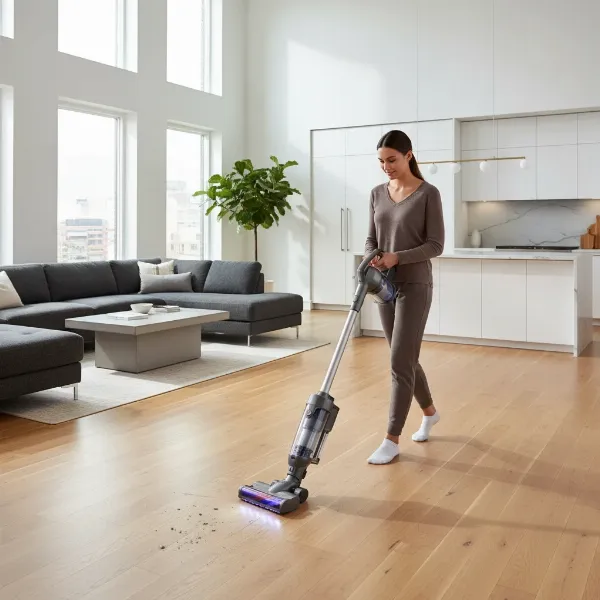 A person effortlessly using a lightweight cordless stick vacuum to clean a floor, demonstrating its mobility.
Lightweight and Compact Design
Cordless vacuums are significantly lighter than their corded counterparts, typically weighing between 2-4 kg. This lightweight design enhances maneuverability, making them easier to handle, carry, and navigate around furniture. Their slim and compact form factor also simplifies storage, with many models offering wall-mounted charging docks that save valuable floor space, a major plus for small apartments or homes where storage is a premium.
Advanced Technology and Suction
While traditionally outmatched in raw power, modern cordless vacuum technology has advanced considerably. Many high-end cordless models now offer impressive suction power, especially in their “MAX” or “Boost” modes, rivaling corded vacuums for daily cleaning tasks. Innovative features such as automatic power adjustment based on floor type or dirt levels, LED illumination to reveal hidden dust, and advanced filtration systems (like HEPA filters) are common, enhancing both cleaning efficacy and user experience. Some even include intelligent dirt detection systems that optimize battery usage.
Key Limitations
The most obvious limitation of cordless vacuums is their reliance on battery life. Run times typically range from 15 to 70 minutes on a single charge, with higher power settings significantly reducing the operational duration. This can be a drawback for larger homes or extensive cleaning sessions. Additionally, suction power in some models can subtly decrease as the battery depletes. Cordless vacuums also generally have smaller dustbins (0.2-0.7 liters), necessitating more frequent emptying. The upfront cost is usually higher due to sophisticated battery technology, and their predicted lifespan (3-5 years) is shorter than corded models, with batteries often requiring replacement over time, adding to long-term costs and environmental considerations. Recharging can also take several hours, an inconvenience if you need to clean continuously.
Corded vs. Cordless Vacuums: A Comparative Look
To help you visualize the differences, here’s a detailed comparison:
| Feature | Corded Vacuum | Cordless Vacuum |
|---|---|---|
| Suction Power | Strong, consistent, ideal for deep cleaning | Strong (especially in MAX mode), can vary with battery |
| Runtime | Unlimited (as long as plugged in) | Limited (15-70 minutes, depending on mode) |
| Mobility | Limited by cord, requires outlet changes | Unrestricted, highly maneuverable |
| Weight | Heavier (5-10 kg) | Lighter (2-4 kg) |
| Dust Capacity | Larger (1.5-6L), less frequent emptying | Smaller (0.2-0.7L), requires frequent emptying |
| Price (Upfront) | Generally lower | Generally higher |
| Lifespan | Longer (8-10+ years) | Shorter (3-5 years), battery degradation |
| Best For | Large homes, deep cleaning, heavy carpet, budget | Small/medium homes, quick clean-ups, versatility, stairs, cars |
| Storage | Bulkier, takes more space | Compact, often wall-mountable |
| Maintenance | Can be simpler, no battery care | Battery care, potential battery replacement |
Choosing the Right Vacuum for Your Needs (Buying Guide)
Making the ultimate choice between a corded and cordless vacuum depends heavily on your unique household and cleaning priorities.
Assess Your Home and Lifestyle
Begin by evaluating your living situation. Do you live in a large house with extensive carpeting or a small apartment with mostly hard floors? Corded vacuums excel in larger spaces requiring deep carpet cleaning, while cordless models are often perfect for small to medium-sized homes and quick daily clean-ups on various surfaces. Consider if you have pets or suffer from allergies, as this will influence the required suction power and filtration system. Your cleaning habits also play a role: do you prefer a single, thorough weekly clean, or do you need a nimble device for frequent spot cleaning?
Consider Key Specifications
Delve into the technical details. For cordless vacuums, prioritize battery life and runtime, opting for models with removable batteries if you need longer cleaning sessions. For corded models, consider the cord length to ensure adequate reach. Dustbin capacity is important for both; larger bins mean less interruption. Look for advanced filtration systems like HEPA filters, especially if allergies are a concern, as they effectively trap fine dust and allergens. Evaluate the available attachments, as these significantly enhance versatility for different cleaning tasks and surfaces. Lastly, consider the vacuum’s weight and ergonomic design for comfortable handling.
Budget and Long-Term Value
While cordless vacuums often have a higher initial purchase price, remember to factor in potential long-term costs such as battery replacements. Corded vacuums typically offer greater upfront affordability and a longer lifespan, making them a wise investment for those on a tighter budget or seeking maximum durability. Always compare the upfront cost with the expected longevity and any recurring expenses.
Read Reviews and Test if Possible
Before making a final decision, consult expert reviews from reputable sources and read user feedback. These provide real-world insights into a vacuum’s performance, durability, and user-friendliness. If possible, visit a store to physically handle different models to get a feel for their weight, maneuverability, and ease of use. This hands-on experience can be invaluable in making the right choice.
Leading Brands in the Vacuum Cleaner Market
The vacuum cleaner market is diverse, with many brands offering excellent models in both corded and cordless categories. Brands like Dyson and Shark are renowned for their innovative cordless stick vacuums, often featuring cutting-edge technology, powerful suction, and versatile designs. For robust, high-performance corded options, brands such as Miele and Sebo are highly regarded for their durability, powerful motors, and superior filtration systems, making them favorites for deep cleaning and large homes. Other notable brands like Philips, Electrolux, Xiaomi, Bosch, and Kenmore also offer a wide array of reliable choices tailored to different needs and budgets.
Conclusion
The choice between a corded and cordless vacuum cleaner ultimately boils down to a careful evaluation of your personal cleaning preferences, the specifics of your home, and your budget. Corded vacuums continue to offer unmatched, consistent power and unlimited runtime for extensive, deep cleaning tasks, often at a more accessible price point and with greater longevity. Conversely, cordless vacuums provide unparalleled convenience, mobility, and versatility for quick clean-ups and navigating challenging spaces, supported by increasingly powerful and intelligent technology.
Both types have evolved significantly, making it possible to find an excellent vacuum cleaner regardless of your preference. By assessing your home size, floor types, cleaning frequency, and prioritizing features like suction, battery life, or dust capacity, you can confidently select the perfect vacuum cleaner to maintain a clean and healthy living environment. What aspects of vacuuming do you find most challenging in your current routine?
Frequently Asked Questions
Are cordless vacuums as powerful as corded ones?
Modern cordless vacuums, especially high-end models, can offer impressive suction power in their “MAX” modes, often rivaling or even surpassing some corded counterparts for daily cleaning. However, corded vacuums generally maintain consistent, strong suction indefinitely, which is advantageous for prolonged deep cleaning sessions on heavily soiled areas or dense carpets.
How long do cordless vacuum batteries typically last?
Cordless vacuum battery life varies significantly based on the model, battery size, and the power setting used. Most models offer a runtime of 15 to 70 minutes on a single charge. Higher suction modes, like “MAX” or “Boost,” will drain the battery much faster, potentially reducing runtime to 10-20 minutes, while eco or low-power modes maximize it.
Which type of vacuum is better for pet hair?
Both corded and cordless vacuums can be effective for pet hair. Corded vacuums often offer more consistent, higher suction power, which is excellent for deep-cleaning pet hair embedded in carpets. Many modern cordless vacuums, particularly those with specialized motorized brush heads and high suction, also perform exceptionally well on pet hair across various surfaces.
Are corded vacuums still relevant in today’s market?
Absolutely. Corded vacuums remain highly relevant, particularly for larger homes, those with extensive carpeting, or individuals who prioritize continuous, powerful suction for deep cleaning without concerns about battery life. They often offer a more durable design and a lower upfront cost, providing excellent value and performance for specific cleaning needs.
Can a cordless vacuum replace a traditional corded vacuum entirely?
For many households, especially those in smaller to medium-sized homes with mixed flooring and a need for frequent, quick clean-ups, a modern, high-quality cordless vacuum can effectively replace a corded model. However, for very large homes, commercial spaces, or environments requiring extensive deep cleaning of thick carpets, a corded vacuum may still offer a more suitable and uninterrupted cleaning experience.