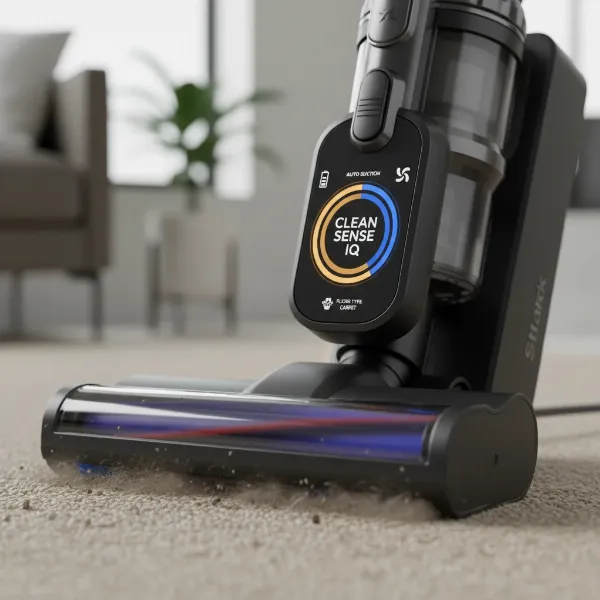
Building a new home offers a unique opportunity to integrate smart technologies and systems that enhance daily living, and a central vacuum system stands out as a paramount choice for homeowners prioritizing a cleaner, healthier, and more convenient environment. Imagine a home where cleaning is no longer a dreaded chore involving heavy machines and tangled cords, but a seamless process that actively improves indoor air quality. This comprehensive guide will navigate you through everything you need to know about selecting and installing the best central vacuum system for your brand-new home. We’ll explore the benefits, various types, crucial selection criteria, and top brands, ensuring you make an informed decision that will serve your household for years to come.
Overview of Central Vacuum Systems
A central vacuum system is a permanent, built-in cleaning solution that offers superior power and convenience compared to traditional portable vacuums. It consists of a power unit (motor and dirt collection canister) typically installed in a garage, basement, or utility room, connected to a network of tubing run within the walls of your home. Strategically placed wall inlets throughout the house allow a lightweight hose to be plugged in, providing powerful suction wherever needed. This design eliminates the need to carry a heavy vacuum, search for outlets, or deal with recirculated dust, significantly improving your cleaning experience.
The concept of a central vacuum isn’t new; early versions emerged in the late 19th and early 20th centuries. Over time, advancements in motor technology, filtration, and system design have transformed them into the sophisticated, efficient appliances we see today. Modern central vacuum systems are engineered for quiet operation, exceptional suction, and advanced allergen filtration, making them a cornerstone of healthy home environments. Their permanent installation during the new home build phase allows for optimal pipe routing and inlet placement, maximizing efficiency and minimizing future disruption.
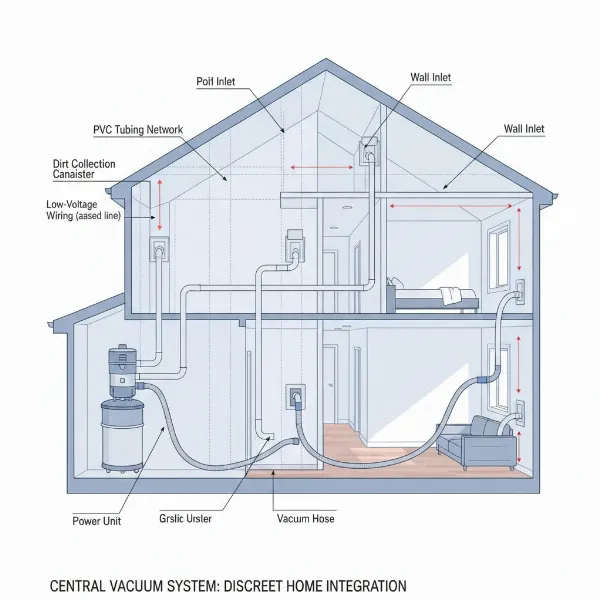 Diagram illustrating the main components of a central vacuum system, including power unit, tubing, and inlets.
Popular Central Vacuum System Types by Filtration
When choosing a central vacuum system, the filtration and dust collection method is a primary consideration, impacting air quality and maintenance. Modern systems primarily fall into three categories: bagged, bagless, and hybrid.
Bagged Central Vacuum Systems
Bagged central vacuum systems utilize disposable bags within the collection canister to capture dirt and debris. When the bag is full, it is simply removed and discarded, making the emptying process exceptionally clean and dust-free.
- Pros:
- Superior Air Quality: Bags trap microscopic dust, allergens, and pet dander more effectively, preventing them from re-entering the air.
- Clean Disposal: No direct contact with dirt during emptying, ideal for allergy sufferers.
- Less Frequent Maintenance: Filters often last longer as the bag protects the motor.
- Cons:
- Ongoing Cost: Replacement bags are a recurring expense.
- Reduced Capacity: Bags can take up space, potentially reducing the overall collection volume compared to bagless systems of similar size.
- How to choose: For maximum allergen retention and minimal mess, bagged systems are an excellent choice. Look for models with high-efficiency bags and adequate capacity for your home size.
|
Our Picks for the Best Vacuum cleaner in 2026
As an Amazon Associate I earn from qualifying purchases.
|
||
| Num | Product | Action |
|---|---|---|
| 1 | Eureka NEU10AE5 Powerful Bagless Upright Vacuum Cleaner Carpet and Floor, AirSpeed Ultra-Lightweight Vacuum Cleaner, w/ Replacement Filter, Blue |

|
| 2 | MONSGA Cordless Vacuum Cleaner, 45KPa 400W Stick Vacuum for Home, 50Mins Anti-Tangled Vacuum Cleaner with Charging Dock, Light-weighted Handheld Vacuum for Pet Hair/Carpet/Floor, LED Touch Display,MV3 |
|
| 3 | UNINELL HOME Cordless Vacuum Cleaner, 45,000Pa/450W Stick Vacuum Cleaners for Home, 60 Mins Runtime, Self-Standing, Detachable Battery, Anti-Tangle Brush, Lightweight Wireless Vacuum for Pet Hair |
|
| 4 | Shark NV352 Navigator Lift Away Upright Vacuum, Hepa Filter, Anti-Allergen Technology, Swivel Steering, Ideal for Carpet, Stairs, & Bare Floors, with Wide Upholstery & Crevice Tools, Lavender |
|
| 5 | Bissell CleanView Compact Turbo Upright Vacuum with Quick Release Wand, Full Size Power, Compact Size for Apartments & Dorms, 3437F |
|
| 6 | Eureka Lightweight Powerful Upright Vacuum Cleaner for Carpet and Hard Floor, PowerSpeed, New Model,Blue,black/New Model |
|
| 7 | Cordless Vacuum Cleaner, 550W 45kPa 65Mins Vacuum Cleaners for Home with LED Display, Self-Standing Stick Vacuum with Anti-Tangle Brush, Rechargeable Vacuum Cordless for Pet Hair/Carpet/Floor |
|
| 8 | Eureka PowerSpeed NEU181A Upright Vacuum Cleaner For Daily Cleaning for Pet-Owning Households , 5-Height Adjustment-Powerful Suction-Large Dust Cup-Pet Turbo Brush,Suitabe For Carpets & Hard Floors |
|
| 9 | Bissell CleanView Compact Upright Vacuum, Fits in Dorm Rooms & Apartments, Lightweight with Powerful Suction and Removable Extension Wand, 3508 |
|
| 10 | Shark Upright Vacuum, Navigator Lift-Away Deluxe with Large Dust Cup Capacity, HEPA Filter, Swivel Steering, Upholstery Tool & Crevice Tool, Blue, NV360 |
|
Bagless Central Vacuum Systems
Bagless central vacuum systems collect dirt and debris directly into a large canister, often utilizing cyclonic separation to filter particles. The canister is emptied directly into a trash can when full.
- Pros:
- No Recurring Costs: Eliminates the need to buy replacement bags.
- Eco-Friendly: Reduces waste by not using disposable bags.
- Large Capacity: Canisters often have a larger usable volume than bagged systems.
- Cons:
- Dust Exposure: Emptying the canister can release a small cloud of dust, which might be an issue for allergy sufferers.
- More Frequent Filter Cleaning: Filters may need more regular cleaning to maintain optimal performance.
- How to choose: If you prioritize convenience and avoiding recurring costs, a bagless system is suitable. Look for units with clear-view windows to monitor dirt levels and easy-to-clean washable filters.
Hybrid Central Vacuum Systems
Hybrid central vacuum systems offer the best of both worlds, providing the flexibility to operate with or without a disposable bag. This adaptability allows homeowners to switch between modes based on their cleaning needs or preferences.
- Pros:
- Flexibility: Use bags for enhanced filtration and clean disposal, or go bagless for cost savings and larger capacity.
- Adaptability: Ideal for households where needs may change, such as when allergy seasons are particularly bad or during heavy cleaning projects.
- Cons:
- Potential Compromises: While versatile, some hybrid systems may not offer the absolute peak performance in either bagged or bagless mode compared to dedicated systems.
- How to choose: Hybrid systems are excellent for those who want options. Consider models with easy-to-switch mechanisms and robust filtration whether a bag is in use or not.
Central Vacuum System Comparison Table
| Feature | Bagged Systems (e.g., OVO Black 630) | Bagless Systems (e.g., Prolux CV12000) | Hybrid Systems (e.g., OVO 750AW, Ultra Clean SC200) |
|---|---|---|---|
| Airwatts | 630 AW (OVO Black 630) | 1500W motor (130 CFM) (Prolux CV12000) | 550-750 AW (OVO models) |
| Coverage Area | Up to 5,000 sq ft | Up to 12,000 sq ft | Up to 9,000 sq ft |
| Filtration | Bag only (99.97% efficiency) | 3-Stage Bagless (Micron, HEPA) | Hybrid (with or without bags, HEPA option) |
| Capacity | 18L (OVO Black 630) | 16.1L (Prolux CV12000) | 6.6-9.25 gallons (OVO models) |
| Noise Level | Generally very quiet | Can be louder (82dB for Prolux CV12000) | Whisper-quiet (58-65dB for OVO models) |
| Maintenance | Clean bag disposal, replace bags | Empty canister, clean filters | Flexible, empty bag/canister, clean filters |
| Key Benefit | Best air quality, cleanest emptying | No recurring bag costs | Versatility, good balance of features |
Note: Airwatt ratings and coverage areas vary significantly by model and manufacturer.
Important Criteria When Choosing a Central Vacuum System
Selecting the right central vacuum system for your new home involves evaluating several key performance indicators and features. Understanding these criteria will help you match a system to your specific needs and ensure long-term satisfaction.
Suction Power (Airwatts vs. CFM)
The effectiveness of a central vacuum largely depends on its suction power, typically measured in Airwatts (AW) and Cubic Feet per Minute (CFM).
- Airwatts quantify the actual cleaning power at the end of the hose, reflecting both airflow and water lift. A higher airwatt rating indicates stronger suction, crucial for deep cleaning carpets, picking up pet hair, and covering large areas. For homes, 500-600 Airwatts are generally adequate for light cleaning, 600-700 AW for typical household cleaning, and 700+ AW for excellent deep cleaning and pet hair removal.
- CFM measures the volume of air moved per minute, indicating the system’s ability to pick up larger debris. While both are important, Airwatts often correlate better with real-world cleaning performance.
- Choosing Wisely: When selecting a system for a new home, it’s recommended to choose a unit with an airwatt rating that provides a buffer—ideally, rated for 20-25% more square footage than your actual home size. This ensures consistent suction even at the furthest inlets and accounts for varying hose lengths and attachment types.
Noise Level
One of the most appealing advantages of a central vacuum system is its quiet operation within the living space. The main power unit, which houses the motor, is typically installed in a remote location such as a garage, basement, or utility room. This strategic placement significantly dampens noise, allowing for a much quieter cleaning experience compared to portable vacuums.
- Impact on Comfort: A quieter system means you can vacuum without disturbing sleeping children, work-from-home spouses, or even having a conversation in an adjacent room.
- What to Look For: Many manufacturers include integrated mufflers, noise-blocking foam, or soft-start technologies to further reduce operational sound. Some top-tier systems operate as low as 58dB, making them practically whisper-quiet indoors. If the power unit will be installed near living areas, prioritize models with excellent noise reduction features.
Canister Capacity
The capacity of the dirt collection canister determines how frequently you will need to empty it. Central vacuum canisters typically range from 4 to over 9 gallons, or 16 to 41 liters.
- Impact on Convenience: A larger capacity means less frequent emptying, which is particularly beneficial for larger homes, households with pets, or those with heavy cleaning needs. For an average family of four, a 6-gallon (25L) canister might need emptying every 5-7 weeks, while a smaller 4-gallon unit could require it every 1-2 weeks.
- Matching to Home Size: For a new home, consider the total square footage and anticipated dirt load. A larger home or one with multiple pets will benefit significantly from a higher capacity unit to minimize maintenance tasks.
Filtration System
The filtration system is critical for indoor air quality, especially for residents with allergies or asthma. Central vacuum systems generally offer superior filtration compared to portable vacuums, as the exhaust is typically vented outside or through a highly efficient filter system.
- Types of Filters:
- HEPA Filters: High-Efficiency Particulate Air filters are a gold standard, capable of capturing 99.97% of airborne particles as small as 0.3 microns, including dust mites, pet dander, pollen, and mold spores.
- Micron Pre-filters: These coarse filters catch larger particles before they reach finer filters or the motor, extending the life of other filter components.
- Cyclonic Separation: Many bagless systems use centrifugal force to separate dirt and debris into the canister, often followed by a fine filter.
- Importance: For new home builds, integrating a system with excellent filtration, ideally HEPA or a multi-stage hybrid system, can significantly reduce indoor allergens and contribute to a healthier living environment.
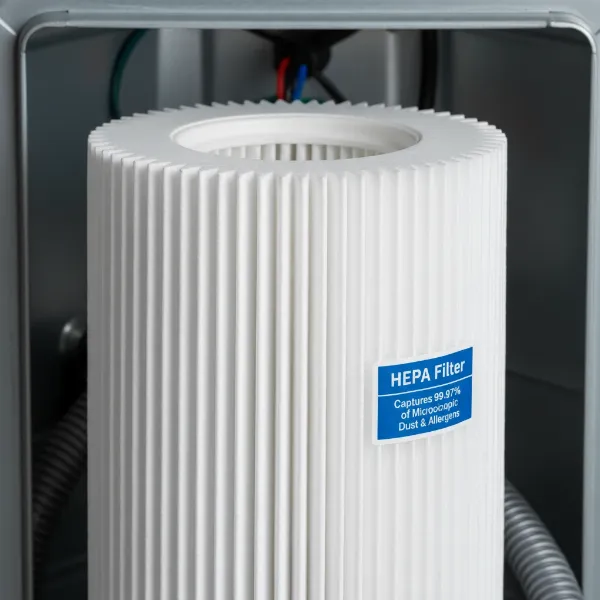 Close-up of a high-efficiency HEPA filter used in a central vacuum system for superior air quality.
Other Features
Beyond the core specifications, several other features can enhance the convenience and longevity of your central vacuum system.
- Soft-Start Technology: This feature gradually ramps up the motor speed, reducing stress on the motor and potentially extending its lifespan by up to 20%.
- Accessory Kits: Comprehensive kits often include specialized tools like powered vacuum heads for carpets, crevice tools for tight spaces, dusting brushes, upholstery tools, and floor brushes for hard surfaces. Some even include garage-specific attachments.
- LED Indicators: Useful lights can alert you when the canister is full or if there’s a system blockage, simplifying maintenance.
- Inlet Types: Consider different inlet designs, such as standard wall inlets, automatic dustpans (kick plates) for kitchens, and retractable hose systems that store the hose inside the wall.
- Hose Length and Material: Hoses typically come in lengths from 30 to 50 feet. Longer hoses reduce the number of inlets required, but can be heavier. Consider lightweight, crush-proof hoses for durability and ease of use.
Central Vacuum System Buying Guide for New Home Builds
Installing a central vacuum system during a new home build is the ideal scenario, allowing for seamless integration of tubing and inlets. Here’s a structured approach to ensure you choose the perfect system for your new residence.
-
Define Your Needs and Home Specifications:
- Home Size: Accurately measure your home’s square footage. Central vacuum systems are rated for specific coverage areas. Aim for a system rated 20-25% higher than your actual square footage to ensure optimal performance.
- Floor Types: Do you have mostly carpets, hardwood, tile, or a mix? Different power units and accessory kits are optimized for various surfaces. A powered brush head is essential for carpets, while a horsehair brush is gentle on hard floors.
- Household Composition: Do you have pets? Allergy sufferers? These factors heavily influence the required suction power, filtration type (HEPA or bagged systems are better for allergies), and canister capacity.
- Cleaning Frequency: How often do you plan to vacuum? More frequent cleaning might warrant a larger canister or a system designed for heavy-duty use.
-
Establish Your Budget:
- Central vacuum systems involve two main costs: the unit itself and installation. Power units can range from a few hundred to over a thousand dollars.
- Installation Costs: Professional installation for a new home typically ranges from $1,200 to $3,400, depending on the home’s size and complexity. While DIY is possible, it requires specialized tools and knowledge of home construction, and mistakes can be costly to fix. Factor in these costs early in your build planning.
-
Research Brands and Models:
- Leverage online reviews, comparison sites, and manufacturer websites. Pay attention to airwatt ratings, canister capacity, filtration types, noise levels, and included accessories.
- Look for brands with a strong reputation for durability and customer service.
-
Evaluate Installation Options:
- Since it’s a new build, work closely with your builder and potentially an experienced central vacuum installer. They can plan optimal tubing routes, power unit placement (garage or basement is ideal for noise reduction), and inlet locations (typically one inlet per 700 square feet).
- Discuss specialized inlets like kitchen automatic dustpans or Vroom systems for garages and utility rooms for added convenience.
-
Consider Warranty and Long-Term Costs:
- Warranties for central vacuum power units typically range from 5 to 10 years, with some offering lifetime coverage on certain components. A longer warranty often signifies confidence in the product’s durability.
- Factor in potential long-term costs: replacement bags (if applicable, $60-120/year), filter replacements ($20-50 every 1-2 years), and occasional professional maintenance ($100-200 every 2-3 years).
Reputable Central Vacuum System Brands
The central vacuum market features several manufacturers known for quality, innovation, and reliability. When considering a system for your new home, these brands are often highly rated:
- OVO: Frequently appears in top recommendations, offering a range of powerful hybrid systems with strong airwatt ratings (e.g., OVO 750AW, OVO 700AW). Known for soft-start technology and quiet operation.
- Prolux: Offers robust, often bagless, systems with high power, suitable for very large homes (e.g., Prolux CV12000).
- Ultra Clean: Provides good value systems, often hybrid, with integrated mufflers for reduced noise (e.g., Ultra Clean SC200).
- Cana-vac: A Canadian-made brand known for durable systems with powerful motors and excellent filtration, including HEPA options.
- Nutone: A well-established brand offering a variety of central vacuum units with different power levels and capacities.
- Beam: Another long-standing brand in the central vacuum industry, known for reliable and powerful systems.
- VacuMaid: Offers a range of cyclonic and inverted bag systems, focusing on strong performance and effective dirt separation.
- Riccar: Known for quality home cleaning appliances, their central vacuum systems typically offer hybrid filtration and robust construction.
- HP Dirt Devil: Provides more compact and affordable options, often suitable for smaller homes or specific utility areas.
- Drainvac: Offers premium Canadian-made systems, often with very large capacities and high airwatt ratings.
“Investing in a central vacuum system during a new home build is not just about cleaning; it’s about enhancing your home’s value and your family’s well-being by providing unmatched convenience and superior indoor air quality.” – [Expert Name], Home Automation Specialist
Conclusion
Choosing the best central vacuum system for your new home build is a significant decision that promises to elevate your cleaning routine and improve your living environment. By understanding the advantages of these built-in systems—from their unparalleled suction power and whisper-quiet operation to their superior air filtration—you can select a solution tailored to your family’s needs. Key factors such as airwatts, canister capacity, filtration type, and professional installation are paramount to consider for optimal performance and longevity. Investing in a reputable brand with a strong warranty ensures peace of mind, transforming mundane cleaning into an effortless task for years to come. What kind of central vacuum accessories do you envision making your daily cleaning even more seamless in your new home?
Frequently Asked Questions
How much does central vacuum installation cost in a new home?
Professional central vacuum installation in a new home typically ranges from $1,200 to $3,400. This cost varies based on your home’s size, the number of inlets, and the complexity of the tubing runs, ensuring a custom fit for your specific blueprint.
Are central vacuum systems worth the investment for a new build?
Yes, central vacuum systems are a worthwhile investment, especially for new home builds, as they offer superior cleaning power, improve indoor air quality by removing allergens, and significantly increase convenience by eliminating heavy portable vacuums. They can also enhance your home’s resale value.
Can I install a central vacuum system myself during construction?
While DIY installation is technically possible, it is highly recommended to use a professional installer during new home construction. Proper pipe routing, sealing, and power unit placement are crucial for system efficiency and avoiding costly mistakes that could impact performance.
How long do central vacuum systems typically last?
Central vacuum systems are renowned for their durability, often lasting 7-10 years with proper maintenance, though some units can exceed 20 years. Features like “soft-start” technology can further extend the motor’s lifespan, protecting your investment.
What size central vacuum system do I need for my new house?
The appropriate size depends on your home’s square footage; aim for a unit rated for 20-25% more square footage than your actual home size to ensure consistent suction at all inlets. For example, a 3,000 sq ft home might benefit from a system rated for 3,600-3,750 sq ft or more.