Battling allergies in your own home can feel like an endless struggle, especially when airborne irritants constantly circulate. Your vacuum cleaner, an essential tool in this fight, can either be your greatest ally or an unexpected foe. With so many options available, from traditional bagged models to modern bagless designs, deciding which type is truly better for managing allergies can be a complex choice. This comprehensive guide will dissect the pros and cons of both bagged and bagless vacuums, focusing specifically on their impact on allergy sufferers, to help you make an informed decision for a cleaner, healthier living space.
Understanding Vacuum Cleaners for Allergy Sufferers
A vacuum cleaner’s primary role is to remove dust, dirt, and debris from your home. However, for those with allergies, its crucial function extends to effectively capturing microscopic allergens like dust mites, pet dander, and pollen, and preventing them from re-entering the air. The core difference between vacuum types often lies in how they store and dispose of this collected debris, directly influencing their suitability for allergy management. The effectiveness hinges significantly on the vacuum’s filtration system and how well it contains allergens throughout the cleaning and emptying processes.
Bagged Vacuums: A Deeper Dive
Bagged vacuum cleaners have been a household staple for decades, known for their straightforward design and reliable performance. They collect dirt and allergens in a disposable bag, offering a distinct advantage for those sensitive to dust.
How Bagged Vacuums Work
|
Our Picks for the Best Vacuum cleaner in 2026
As an Amazon Associate I earn from qualifying purchases.
|
||
| Num | Product | Action |
|---|---|---|
| 1 | Shark Upright Vacuum, Navigator Lift-Away Deluxe with Large Dust Cup Capacity, HEPA Filter, Swivel Steering, Upholstery Tool & Crevice Tool, Blue, NV360 |

|
| 2 | Shark NV352 Navigator Lift Away Upright Vacuum, Hepa Filter, Anti-Allergen Technology, Swivel Steering, Ideal for Carpet, Stairs, & Bare Floors, with Wide Upholstery & Crevice Tools, Lavender |
|
| 3 | Bissell CleanView Compact Upright Vacuum, Fits in Dorm Rooms & Apartments, Lightweight with Powerful Suction and Removable Extension Wand, 3508 |
|
| 4 | MONSGA Cordless Vacuum Cleaner, 45KPa 400W Stick Vacuum for Home, 50Mins Anti-Tangled Vacuum Cleaner with Charging Dock, Light-weighted Handheld Vacuum for Pet Hair/Carpet/Floor, LED Touch Display,MV3 |
|
| 5 | Bissell CleanView Compact Turbo Upright Vacuum with Quick Release Wand, Full Size Power, Compact Size for Apartments & Dorms, 3437F |
|
| 6 | Eureka Lightweight Powerful Upright Vacuum Cleaner for Carpet and Hard Floor, PowerSpeed, New Model,Blue,black/New Model |
|
| 7 | Cordless Vacuum Cleaner, 550W 45kPa 65Mins Vacuum Cleaners for Home with LED Display, Self-Standing Stick Vacuum with Anti-Tangle Brush, Rechargeable Vacuum Cordless for Pet Hair/Carpet/Floor |
|
| 8 | Eureka PowerSpeed NEU181A Upright Vacuum Cleaner For Daily Cleaning for Pet-Owning Households , 5-Height Adjustment-Powerful Suction-Large Dust Cup-Pet Turbo Brush,Suitabe For Carpets & Hard Floors |
|
| 9 | UNINELL HOME Cordless Vacuum Cleaner, 45,000Pa/450W Stick Vacuum Cleaners for Home, 60 Mins Runtime, Self-Standing, Detachable Battery, Anti-Tangle Brush, Lightweight Wireless Vacuum for Pet Hair |
|
| 10 | Eureka NEU10AE5 Powerful Bagless Upright Vacuum Cleaner Carpet and Floor, AirSpeed Ultra-Lightweight Vacuum Cleaner, w/ Replacement Filter, Blue |
|
Bagged vacuums operate by drawing air, dirt, and debris through a hose or nozzle and into a collection bag inside the unit. These bags are typically made from multiple layers of synthetic material, designed to trap particles as small as pollen, pet dander, and dust mites. The air then passes through additional filters, often including a HEPA filter, before being expelled from the vacuum. The key is that the collected debris remains sealed within the bag until disposal.
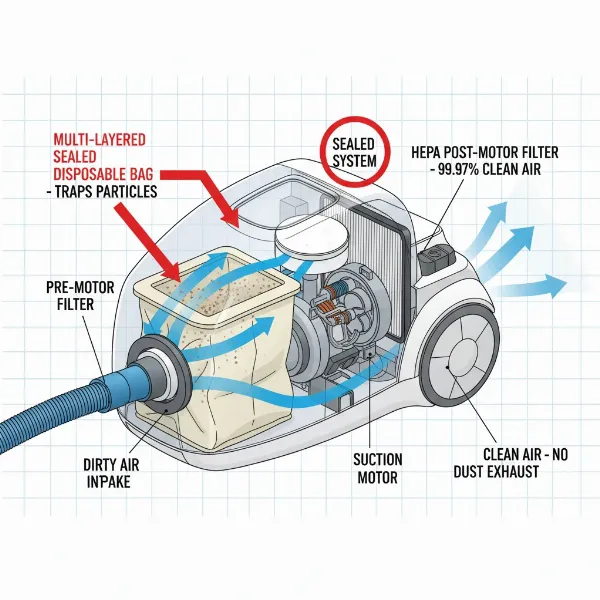 Diagram showing air flow, sealed bag, and HEPA filter in a bagged vacuum for allergy sufferers.
Advantages for Allergy Sufferers
For individuals with allergies, bagged vacuums offer several compelling benefits:
- Superior Allergen Containment: The multi-layered, sealed bags effectively trap dust, dirt, and allergens, preventing them from escaping back into the air during vacuuming.
- Hygienic Disposal: When the bag is full, you simply remove it and dispose of it, often with a self-sealing mechanism. This “no-touch” disposal minimizes your exposure to trapped dust and allergens, making it ideal for severe allergy sufferers.
- Less Airborne Dust: The robust filtration of the bag itself, combined with additional filters, means fewer particles are recirculated into your home’s air during operation.
- Consistent Airflow: Bagged vacuums tend to maintain strong suction power as the bag fills, ensuring efficient cleaning until it’s time for a replacement.
Disadvantages
While beneficial for allergies, bagged vacuums do come with a few drawbacks:
- Recurring Cost of Bags: You’ll need to regularly purchase replacement bags, which adds to the long-term running cost.
- Less Eco-Friendly: The disposable nature of bags contributes to landfill waste, making them a less environmentally sustainable option compared to bagless models.
- Potential for Reduced Suction: Although generally consistent, if a bag becomes extremely full, it can slightly impede airflow and reduce suction efficiency.
Key Features to Look For
When selecting a bagged vacuum for allergies, prioritize models with:
- Multi-layer, Self-sealing Bags: These bags offer enhanced filtration and ensure that allergens remain securely trapped during disposal.
- True HEPA Filtration: Essential for capturing microscopic particles. Look for “True HEPA” certification.
- Sealed System: This critical feature prevents dirty air from bypassing the filters and escaping back into the room.
Bagless Vacuums: An In-Depth Look
Bagless vacuum cleaners gained popularity for their convenience and environmental appeal, eliminating the need for disposable bags. They utilize cyclonic technology to separate dust and debris.
How Bagless Vacuums Work
Bagless vacuums use cyclonic technology to spin air at high speeds, separating dust and debris from the airflow and depositing them into a transparent dustbin or canister. The air then passes through a series of washable or replaceable filters, including pre-motor and post-motor filters, with many modern models incorporating HEPA filters, before being exhausted back into the room.
Advantages
Bagless vacuums offer several advantages that appeal to many users:
- No Bag Cost: Eliminating the need to buy replacement bags saves money over the lifespan of the vacuum.
- Environmentally Friendlier: Without disposable bags, bagless models generate less waste, making them a more eco-conscious choice.
- Visible Dirt Level: The clear dustbin allows you to easily see how much dirt has been collected, which can be satisfying and helps you know when to empty it.
- Consistent Power: Many bagless vacuums are engineered to maintain powerful suction, especially when the dustbin is not overly full and filters are clean.
Disadvantages for Allergy Sufferers
Despite their convenience, bagless vacuums present significant challenges for allergy sufferers:
- Dust Exposure During Emptying: This is the most considerable disadvantage for allergy sufferers. The act of opening and emptying the dustbin can easily release a significant plume of dust, pet dander, and allergens back into the air, potentially triggering allergic reactions.
- Filter Cleaning and Maintenance: Bagless vacuums rely heavily on their filters. These filters require regular cleaning or replacement, which can also be a messy process that exposes you to trapped allergens. If filters are not properly maintained, performance can diminish.
- Potential for Filter Clogging: Filters can clog quickly, especially with fine dust, leading to reduced suction and less effective cleaning if not cleaned frequently.
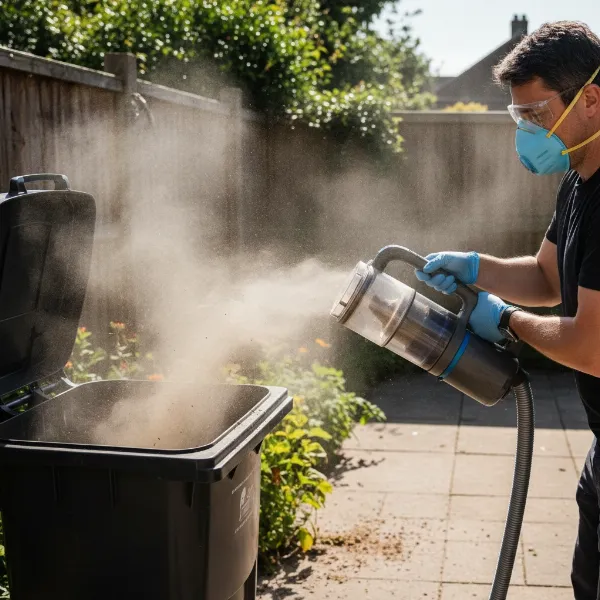 Person emptying a bagless vacuum dustbin outdoors, showing a visible cloud of dust and allergens.
Key Features to Look For
If you opt for a bagless vacuum and suffer from allergies, seek out models with:
- True HEPA Filtration: As with bagged vacuums, this is paramount for capturing tiny allergens.
- Fully Sealed System: Absolutely critical for bagless vacuums to ensure that all air passes through the filters and no dirty air leaks out before filtration.
- Easy-to-Clean Dustbin Design: A design that minimizes dust clouds upon emptying, though complete avoidance is difficult.
- Advanced Cyclonic Separation: Better separation can mean less dust reaching and clogging the filters.
Bagged vs. Bagless: A Head-to-Head Comparison for Allergies
Let’s break down the key differences to help you decide which vacuum type aligns best with your allergy management strategy.
| Feature | Bagged Vacuums | Bagless Vacuums |
|---|---|---|
| Filtration | Excellent, sealed bags often multi-layered, combined with HEPA filters. | Good to excellent with True HEPA filters, but dependent on proper maintenance. |
| Allergen Exposure (Emptying) | Minimal; sealed bags offer hygienic, no-touch disposal. | High; emptying dustbin can release significant dust plumes. |
| Maintenance | Replace bags regularly (easy, clean process); occasional filter replacement. | Empty dustbin frequently (can be messy); clean/replace filters often. |
| Running Costs | Lower initial cost, but ongoing cost of replacement bags. | Higher initial cost, but no bag costs; cost of filter replacements. |
| Environmental Impact | Generates disposable bag waste. | Less disposable waste (no bags), but filters still need disposal. |
| Suction Consistency | Generally maintains strong suction as the bag fills. | Can lose suction if dustbin is full or filters are clogged. |
The Crucial Role of HEPA Filters and Sealed Systems
Regardless of whether you choose a bagged or bagless model, the presence and quality of its filtration system, especially a HEPA filter, are paramount for allergy sufferers.
What is a HEPA Filter?
HEPA stands for High-Efficiency Particulate Air. A true HEPA filter is designed to capture 99.97% of airborne particles that are 0.3 microns in diameter. To put that into perspective, most common allergens like pollen, pet dander, dust mites, and mold spores are larger than 0.3 microns, making HEPA filters incredibly effective at trapping them.
Why a Sealed System Matters
A HEPA filter is only as good as the system it’s part of. A “sealed system” vacuum means that all the air drawn into the vacuum passes through the filtration system, including the HEPA filter, before being expelled. Without a sealed system, air can leak out through cracks or imperfect seals in the vacuum’s casing, releasing unfiltered, allergen-laden air back into your home, even if it has a HEPA filter. This renders the HEPA filter less effective.
Not All HEPA Vacuums Are Created Equal
It’s important to differentiate between “True HEPA” and “HEPA-type” or “HEPA-like” filters. Only “True HEPA” meets the strict capture standards. Furthermore, a vacuum can have a True HEPA filter, but if it doesn’t have a fully sealed system, it may still release allergens. Always look for both a True HEPA filter and an indication of a sealed system for optimal allergy relief.
Recommendations for Allergy Sufferers
Making the right choice depends on the severity of your allergies and your willingness to manage maintenance.
For Severe Allergies
If you or someone in your household suffers from severe allergies, asthma, or other respiratory sensitivities, a bagged vacuum with a True HEPA filter and a fully sealed system is generally the superior choice. The contained disposal method of bags significantly reduces exposure to allergens during emptying, which is often the most critical point of allergen release.
For Mild to Moderate Allergies
For those with mild to moderate allergies, a modern bagless vacuum with a True HEPA filter and a fully sealed system can be an effective option, provided you take extra precautions during maintenance. When emptying the dustbin, consider doing so outdoors, wearing a mask, and gently tapping the bin to release debris rather than vigorously shaking it. Regular cleaning or replacement of all filters is also crucial.
General Tips for Any Vacuum
- Empty Outdoors: Always empty your vacuum’s bag or dustbin outside your home to minimize indoor allergen exposure.
- Wear a Mask: Consider wearing a dust mask (N95 equivalent) when emptying and cleaning vacuum filters.
- Clean/Replace Filters Regularly: Follow manufacturer guidelines for filter maintenance to ensure peak performance and allergen capture.
- Vacuum Frequently: Regular vacuuming helps keep allergen levels down, regardless of the vacuum type.
Beyond the Vacuum: Holistic Allergy Management
While choosing the right vacuum is a significant step, it’s part of a broader strategy for managing allergies. Complement your vacuuming efforts with:
- Air Purifiers: Use HEPA air purifiers to continuously filter airborne allergens.
- Allergen-Proof Bedding: Encase mattresses and pillows in allergen-proof covers.
- Dehumidifiers: Control humidity levels (ideally below 50%) to inhibit dust mite and mold growth.
- Regular Cleaning: Dust surfaces with damp cloths and wash bedding frequently in hot water.
Conclusion
The debate between bagged and bagless vacuums for allergy sufferers ultimately points to one critical factor: allergen containment. While bagless vacuums offer convenience and environmental benefits, the act of emptying the dustbin can pose a significant risk of re-releasing trapped allergens. For severe allergy sufferers, the sealed, hygienic disposal of a bagged vacuum with a True HEPA filter and a fully sealed system remains the gold standard, offering superior protection. However, modern bagless models with equivalent filtration and sealed designs can be effective for milder allergies, provided diligent and cautious maintenance.
Ultimately, the best vacuum is one you will use regularly and maintain properly. Prioritize True HEPA filtration and a sealed system, and consider your comfort level with dust exposure during disposal. What cleaning challenges are you currently facing in your home that the right vacuum could solve?
Frequently Asked Questions
Can a bagless vacuum truly be good for allergies?
Yes, a bagless vacuum can be good for allergies, but with important caveats. It must feature a “True HEPA” filter and a fully sealed system to prevent allergen leaks. Crucially, the user must exercise extreme caution when emptying the dustbin, ideally doing so outdoors and wearing a mask, to avoid re-releasing allergens into the environment.
How often should I change my bagged vacuum cleaner bag?
You should change your bagged vacuum cleaner bag when it is about two-thirds full, or earlier if you notice a decrease in suction power. For allergy sufferers, it’s beneficial to change bags more frequently to maintain optimal filtration and prevent overfilling, which can force allergens out or reduce efficiency.
What does ‘sealed system’ mean in a vacuum?
A ‘sealed system’ in a Vacuum Cleaner means that all the air drawn into the vacuum passes through its entire filtration system, including the HEPA filter, without any leaks. This prevents unfiltered air, containing dust and allergens, from escaping back into your home through cracks or gaps in the vacuum’s casing.
Is a water filter vacuum better for allergies?
Water filter vacuums are often marketed as superior for allergies because they trap dust and allergens in water, preventing them from recirculating. This can be very effective, as the water acts as a natural filter. However, they can be heavier, require careful cleaning after each use to prevent mold growth, and may not always include additional HEPA filtration.