Driving a car with a pristine interior isn’t just about aesthetics; it profoundly enhances your driving experience, promotes better hygiene, and helps maintain your vehicle’s value. Over time, dirt, dust, crumbs, and pet hair inevitably accumulate, embedding themselves into carpets and upholstery. This comprehensive guide will transform your approach to car interior cleaning, providing you with professional vacuuming techniques and insights to achieve a spotless finish, just like the experts.
Overview of Car Interior Vacuum Cleaning
Car interior vacuuming is the foundational step in maintaining a clean, healthy, and inviting vehicle cabin. Its primary purpose is to remove loose dirt, dust, debris, and allergens that settle on surfaces, get trapped in carpets, and hide in crevices. While once a basic sweep with a household attachment, car interior cleaning has evolved into a meticulous process utilizing specialized tools and techniques for optimal results. Modern approaches emphasize a systematic methodology, employing a range of vacuum types and accessories to tackle every nook and cranny. The goal is to not only make the car look clean but to genuinely purify its environment.
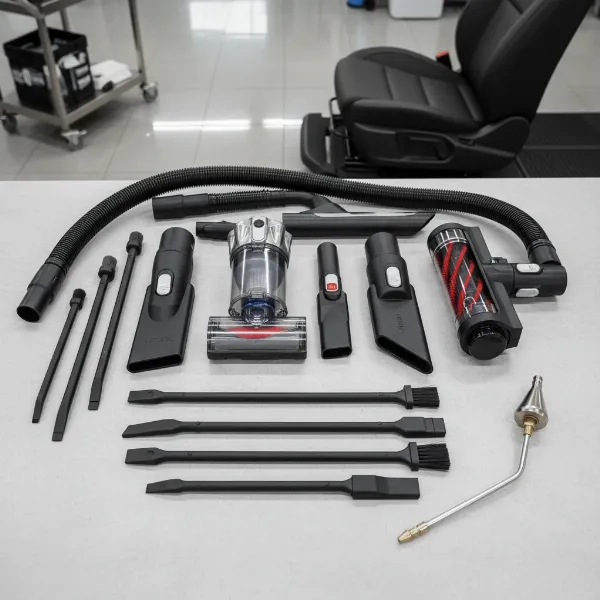 Essential tools and specialized attachments for professional car interior vacuuming, showcasing various vacuum types.
Popular Vacuum Types for Car Detailing
Choosing the right vacuum is crucial for effective car interior detailing. Different vacuums offer distinct advantages, catering to various cleaning needs and preferences.
Handheld Car Vacuums
Handheld vacuums are lauded for their convenience and portability, making them ideal for quick clean-ups and reaching tight spaces.
- Pros: Highly portable, lightweight, often cordless for maximum maneuverability. Excellent for quick spills and daily maintenance.
- Cons: Generally have less suction power and smaller dust bins compared to larger models. Battery life can be a limiting factor for extensive cleaning sessions.
- Choosing Tips: Look for models with strong suction for their size, good battery life (if cordless), and a variety of useful attachments like crevice tools.
|
Our Picks for the Best Vacuum cleaner in 2026
As an Amazon Associate I earn from qualifying purchases.
|
||
| Num | Product | Action |
|---|---|---|
| 1 | Shark NV352 Navigator Lift Away Upright Vacuum, Hepa Filter, Anti-Allergen Technology, Swivel Steering, Ideal for Carpet, Stairs, & Bare Floors, with Wide Upholstery & Crevice Tools, Lavender |

|
| 2 | Bissell CleanView Compact Turbo Upright Vacuum with Quick Release Wand, Full Size Power, Compact Size for Apartments & Dorms, 3437F |
|
| 3 | Eureka NEU10AE5 Powerful Bagless Upright Vacuum Cleaner Carpet and Floor, AirSpeed Ultra-Lightweight Vacuum Cleaner, w/ Replacement Filter, Blue |
|
| 4 | UNINELL HOME Cordless Vacuum Cleaner, 45,000Pa/450W Stick Vacuum Cleaners for Home, 60 Mins Runtime, Self-Standing, Detachable Battery, Anti-Tangle Brush, Lightweight Wireless Vacuum for Pet Hair |
|
| 5 | Shark Upright Vacuum, Navigator Lift-Away Deluxe with Large Dust Cup Capacity, HEPA Filter, Swivel Steering, Upholstery Tool & Crevice Tool, Blue, NV360 |
|
| 6 | Cordless Vacuum Cleaner, 550W 45kPa 65Mins Vacuum Cleaners for Home with LED Display, Self-Standing Stick Vacuum with Anti-Tangle Brush, Rechargeable Vacuum Cordless for Pet Hair/Carpet/Floor |
|
| 7 | Bissell CleanView Compact Upright Vacuum, Fits in Dorm Rooms & Apartments, Lightweight with Powerful Suction and Removable Extension Wand, 3508 |
|
| 8 | Eureka Lightweight Powerful Upright Vacuum Cleaner for Carpet and Hard Floor, PowerSpeed, New Model,Blue,black/New Model |
|
| 9 | Eureka PowerSpeed NEU181A Upright Vacuum Cleaner For Daily Cleaning for Pet-Owning Households , 5-Height Adjustment-Powerful Suction-Large Dust Cup-Pet Turbo Brush,Suitabe For Carpets & Hard Floors |
|
| 10 | MONSGA Cordless Vacuum Cleaner, 45KPa 400W Stick Vacuum for Home, 50Mins Anti-Tangled Vacuum Cleaner with Charging Dock, Light-weighted Handheld Vacuum for Pet Hair/Carpet/Floor, LED Touch Display,MV3 |
|
Shop Vacs (Wet/Dry Vacuums)
Shop vacs are heavy-duty machines designed for both dry debris and liquid spills, offering superior power and capacity.
- Pros: Exceptional suction power, large capacity for extensive cleaning, capable of handling wet messes and for extraction. Durable and robust.
- Cons: Can be bulky and noisy, less portable than handheld units, requiring an external power source.
- Choosing Tips: Consider the tank size based on your needs, look for strong CFM (cubic feet per minute) for airflow, and ensure it comes with car-specific attachments or that they are available.
Cordless Stick Vacuums (with Attachments)
Modern cordless stick vacuums, often designed for homes, can be adapted for car use, especially those with powerful motors and versatile attachments.
- Pros: Strong suction comparable to some corded models, highly maneuverable, and often come with a wide array of attachments. Excellent battery technology provides decent run times.
- Cons: Can be expensive. While powerful, they might not match the raw suction of a dedicated shop vac for deeply embedded dirt.
- Choosing Tips: Prioritize models with strong “eco” modes for longer battery life, ensure attachments like mini motorized tools or flexible crevice tools are included or compatible.
Comparing Vacuum Types for Car Interior Use
| Feature | Handheld Car Vacuums | Shop Vacs (Wet/Dry Vacuums) | Cordless Stick Vacuums |
|---|---|---|---|
| Suction Power | Moderate to Good | Excellent | Good to Excellent |
| Portability | Excellent | Poor to Moderate | Excellent |
| Attachments | Basic (crevice, brush) | Wide range (often larger) | Wide range (specific car tools) |
| Capacity | Small | Large | Moderate |
| Wet/Dry Cap. | Dry only | Both wet and dry | Dry only (mostly) |
| Noise Level | Moderate | High | Moderate |
| Price Range | Low to Mid | Mid to High | High |
| Best For | Quick clean-ups, tight spots | Deep cleaning, extraction, large debris | Versatile cleaning, pet hair |
Crucial Criteria for Selecting a Car Vacuum
Choosing the right vacuum for your car is an investment in cleanliness. Consider these factors to make an informed decision:
Suction Power
The heart of any good vacuum is its suction power. For car interiors, where dirt can be deeply embedded in carpets or upholstery, robust suction is non-negotiable.
- Impact: Higher suction efficiently removes stubborn dirt, pet hair, and fine dust from all surfaces. Weak suction will leave behind embedded particles.
- Selection: Look for models with strong motor wattage (for corded) or high air watts/Pascals (for cordless). For pet owners, extra strong suction is vital.
Noise Level
While some noise is inevitable, an excessively loud vacuum can make the cleaning process uncomfortable, especially in confined spaces.
- Impact: A noisy vacuum can lead to user fatigue and reluctance to perform regular cleaning.
- Selection: Check decibel ratings if available. While professional shop vacs tend to be louder, some handheld or stick vacuums offer quieter operations.
Dust Bin Capacity
The size of the dust bin determines how often you’ll need to empty it during a cleaning session.
- Impact: A larger capacity means less interruption, especially when tackling a very dirty car or multiple vehicles. Smaller bins are fine for quick touch-ups.
- Selection: For thorough detailing, a medium to large capacity is preferable. For handhelds, prioritize ease of emptying.
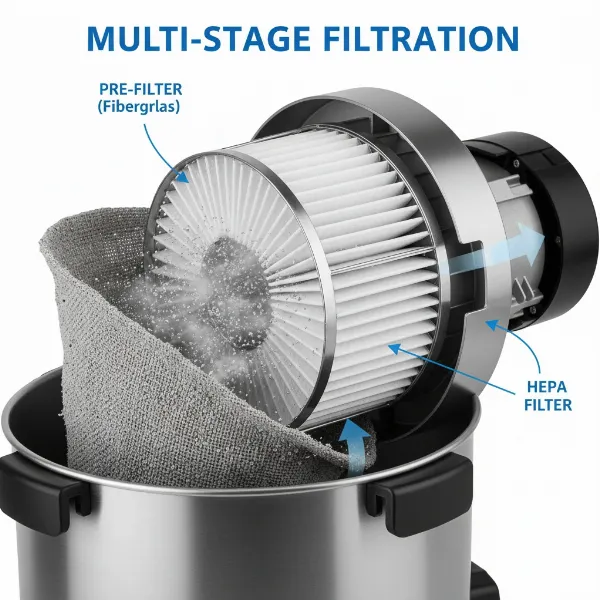
Filtration System
Effective filtration is crucial for trapping fine dust, allergens, and pet dander, preventing them from being recirculated into the car’s air.
- Types: HEPA filters are the gold standard, capturing 99.97% of particles down to 0.3 microns. Other multi-stage filters also help.
- Importance: A good filter significantly improves air quality inside your car, which is particularly beneficial for allergy sufferers.
Essential Attachments and Features
The right attachments multiply your vacuum’s utility, allowing you to reach and clean every part of your car.
- Key Attachments: A narrow crevice tool is indispensable for console gaps, seat seams, and door pockets. A brush attachment (upholstery tool) helps agitate and lift dirt from fabric seats and carpets. A flexible hose or extension wand can extend reach.
- Other Features: LED lights on nozzles illuminate dark areas under seats. Cord length (for corded models) or battery life (for cordless) impacts usability.
Professional Car Vacuuming Buying Guide
Embarking on the journey to a professionally clean car interior requires a thoughtful approach to purchasing your vacuum.
- Assess Your Needs: How often will you clean? Do you have pets? Is your car typically very dirty or just needs maintenance? This will dictate the required power and features.
- Set a Budget: Car vacuums range widely in price. Determine what you’re willing to spend, keeping in mind that higher quality often translates to better performance and durability.
- Research Models & Features: Look specifically for vacuums marketed for car detailing or those with strong reviews from car enthusiasts. Focus on the criteria mentioned above (suction, attachments, filtration).
- Read Reviews & Watch Demos: User reviews and professional video demonstrations offer real-world insights into a vacuum’s performance and ease of use in a car environment.
- Check for Car-Specific Tools: Some vacuums come with specialized detailing kits, including smaller brushes and flexible hoses designed for tight car spaces.
- Consider Wet/Dry Capability: If you plan on deep cleaning upholstery with shampoo and water, a wet/dry vac (shop vac) is essential.
- Warranty & Support: A good warranty provides peace of mind, and readily available customer support is helpful if issues arise.
Techniques for a Pro-Level Car Interior Vacuum Clean
Achieving a truly professional car interior clean goes beyond simply running a vacuum around. It involves a systematic process and specific techniques.
The Preparation Phase
Before you even turn on the vacuum, proper preparation is paramount.
- Declutter & Remove Mats: Remove all trash, personal items, and car seats. Take out all floor mats to clean them separately.
- Initial Debris Removal: Pick up any large debris, coins, or items that could clog your vacuum or damage its internal components. Shake out floor mats vigorously outside the car.
Leveraging Compressed Air
Professional detailers almost always start with compressed air to dislodge hidden dirt.
- Dislodge Hidden Dirt: Use a compressed air gun with a long, narrow nozzle (or a can of compressed air) to blow out dirt, dust, and crumbs from vents, dashboard crevices, seat seams, and under seat rails. Work from the top of the interior downwards to move all loose particles to the floor. This step is crucial for reaching areas the vacuum can’t.
Mastering Vacuuming Techniques
A systematic approach ensures no spot is missed and dirt is effectively removed.
- Top-Down, Back-to-Front: Start vacuuming from the rear of the car, working your way to the front. Within each section, work from top (e.g., headliner if dirty) to bottom (floors).
- Seats: Use an upholstery attachment for fabric seats. For leather, use a soft brush attachment. Pay close attention to the seams and folds. Move seats all the way forward and then all the way back to access the entire floor area.
- Carpets & Floorboards: Use a brush attachment or the main vacuum head. Work in overlapping strokes. For deeply embedded dirt or pet hair, use a stiff brush to agitate the fibers before vacuuming again. Thoroughly vacuum under the seats and along the edges of the floorboards where dirt accumulates.
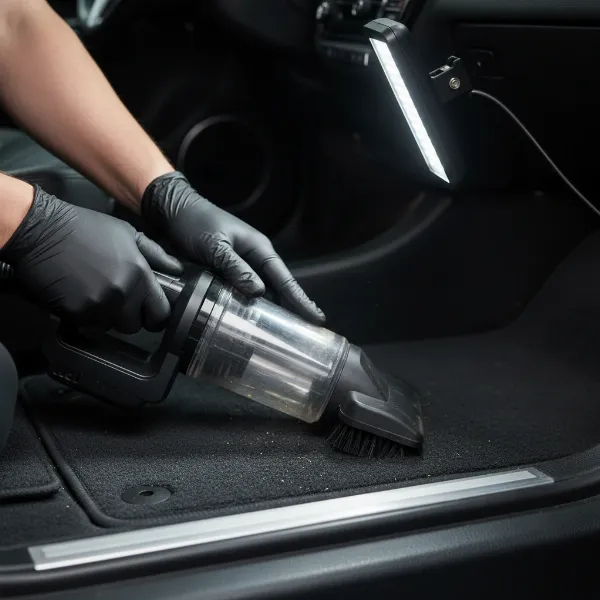 Professional detailer using a specialized vacuum attachment to meticulously clean car interior carpet and floorboards.
 - Hard-to-Reach Areas: Employ the crevice tool for console gaps, door pockets, and around pedals. A detailing brush can help loosen dust from these areas before vacuuming.
- Targeting Pet Hair: Pet hair can be notoriously difficult. Use a rubber brush or a pet hair attachment (often a mini-motorized brush) to gather and lift hair before vacuuming. Rubber gloves can also be effective for manually gathering hair.
Deep Cleaning Car Mats and Upholstery
For stubborn stains, spills, or odors, deep cleaning with a wet-vac extractor is the professional solution.
- Pre-Treat Stains: Apply a suitable car interior cleaner or upholstery shampoo directly to the stained area. Allow it to soak for a few minutes to break down the grime.
- Agitation: Gently agitate the cleaner into the fabric using a soft-bristle brush.
- Wet-Vac Extraction: Fill your wet/dry vacuum’s solution tank (if it has one) with clean water or a specific extraction solution. Spray the area, then immediately vacuum up the dirty liquid. Repeat this process with clean water until the water being extracted runs clear.
- Thorough Drying: This is critical to prevent mildew and odors. Use microfiber towels to blot excess moisture. Open car doors, use a fan, or park in direct sunlight to aid drying. Do not reinstall mats or close up the car until everything is completely dry.
Maintaining a Spotless Interior
A professional deep clean is a great starting point, but consistent effort is key to maintaining a spotless car interior.
- Regular Light Vacuuming: A quick vacuum of high-traffic areas (driver’s footwell, passenger seat) once a week or every other week can prevent major build-up.
- Wiping Down Hard Surfaces: Regularly wipe down the dashboard, console, door panels, and steering wheel with a suitable interior cleaner and microfiber cloth.
- Address Spills Promptly: The faster you tackle a spill, the easier it is to clean and prevent stains or odors from setting in.
Conclusion
Transforming your car’s interior from grimy to pristine is an an achievable goal with the right vacuum cleaner and professional techniques. By systematically preparing the space, utilizing compressed air to dislodge hidden dirt, and mastering the art of vacuuming with appropriate attachments, you can elevate your car’s cleanliness to a professional standard. Remember that powerful suction, versatile attachments, and a good filtration system are key features for any effective car vacuum. Coupled with deep cleaning methods like wet-vac extraction for stubborn issues and consistent maintenance, your vehicle will not only look immaculate but also provide a healthier, more enjoyable driving environment. Why settle for less when a professional-level clean is within your reach?
Frequently Asked Questions
What kind of vacuum is best for car detailing?
For professional car detailing, a powerful wet/dry shop vacuum is generally considered best due to its superior suction, large capacity, and ability to handle both dry debris and liquid extraction for deep cleaning. High-quality handheld or cordless stick vacuums with specialized attachments are excellent for maintenance and quick clean-ups.
How do professionals remove embedded dirt from car carpets?
Professionals first use compressed air to blow out loose dirt from crevices. Then, they use a powerful vacuum with a brush attachment to agitate and lift embedded dirt. For very stubborn grime, they might pre-treat with an interior cleaner, agitate with a stiff brush, and then use a wet-vac extractor to rinse and remove the dirty solution.
Can I use my home vacuum cleaner to clean my car?
While you can use a home Vacuum Cleaner for light car cleaning, it may not be as effective as a dedicated car vacuum or shop vac. Household vacuums often lack the specialized attachments (like narrow crevice tools) needed for tight car spaces, and their suction might not be powerful enough for deeply embedded car dirt or pet hair.
How often should I vacuum my car’s interior?
For general cleanliness and to prevent significant dirt build-up, vacuuming your car’s interior every 2-4 weeks is recommended. If you frequently transport pets, eat in your car, or drive on dusty roads, you might need to vacuum weekly to maintain a truly clean environment.