Few household chores are as satisfying as a thorough vacuuming, yet that satisfaction can quickly turn to frustration when your trusty machine suddenly loses suction. A clogged vacuum hose is a common culprit, transforming your powerful cleaning tool into an ineffective noisemaker. But don’t despair; clearing a blocked hose doesn’t have to be a daunting task, nor does it require a call to a professional. This comprehensive guide will walk you through safe, effective methods to remove blockages without causing damage, ensuring your vacuum cleaner returns to peak performance.
Recognizing a Clogged Vacuum Hose
How do you know if a blocked hose is the real issue? Identifying the signs early can save you time and prevent further damage to your appliance. The most obvious indicator is a significant loss of suction. You might notice your vacuum leaving behind dirt and debris it would normally pick up with ease. Other tell-tale signs include unusual, strained noises coming from the motor, the vacuum blowing dust back into the room, or even a foul odor if organic matter is trapped and decomposing inside. These blockages often occur when the vacuum inadvertently picks up something too large, stringy items like hair or threads, or even small toys that get lodged in the hose’s narrow passages.
Essential Safety First Steps
Before you even think about tackling a clog, safety must be your absolute priority. Ignoring these crucial steps can lead to serious injury or damage to your vacuum cleaner.
- Unplug the Vacuum: This is non-negotiable. Always disconnect your vacuum from the power source before performing any maintenance or inspection. This prevents accidental activation, which could cause injury or pull the hose back unexpectedly.
- Detach the Hose: Most vacuum cleaner hoses are designed to be easily detached from both the main unit and any attachments. Refer to your user manual for specific instructions on how to safely remove the hose for your model. Forcing it can damage the connection points.
- Consult Your User Manual: Your vacuum cleaner’s manual is a valuable resource. It may offer model-specific advice on unclogging, highlight parts to be cautious of, or even recommend specific tools or methods suitable for your machine.
Step-by-Step Guide to Unclogging Your Vacuum Hose
Once you’ve taken the necessary safety precautions, you can begin the process of identifying and removing the blockage. Work patiently and methodically to ensure you don’t damage the hose.
Visual Inspection and Gentle Shaking
|
Our Picks for the Best Vacuum cleaner in 2026
As an Amazon Associate I earn from qualifying purchases.
|
||
| Num | Product | Action |
|---|---|---|
| 1 | Eureka Lightweight Powerful Upright Vacuum Cleaner for Carpet and Hard Floor, PowerSpeed, New Model,Blue,black/New Model |

|
| 2 | Shark NV352 Navigator Lift Away Upright Vacuum, Hepa Filter, Anti-Allergen Technology, Swivel Steering, Ideal for Carpet, Stairs, & Bare Floors, with Wide Upholstery & Crevice Tools, Lavender |
|
| 3 | Cordless Vacuum Cleaner, 550W 45kPa 65Mins Vacuum Cleaners for Home with LED Display, Self-Standing Stick Vacuum with Anti-Tangle Brush, Rechargeable Vacuum Cordless for Pet Hair/Carpet/Floor |
|
| 4 | Bissell CleanView Compact Turbo Upright Vacuum with Quick Release Wand, Full Size Power, Compact Size for Apartments & Dorms, 3437F |
|
| 5 | UNINELL HOME Cordless Vacuum Cleaner, 45,000Pa/450W Stick Vacuum Cleaners for Home, 60 Mins Runtime, Self-Standing, Detachable Battery, Anti-Tangle Brush, Lightweight Wireless Vacuum for Pet Hair |
|
| 6 | Eureka PowerSpeed NEU181A Upright Vacuum Cleaner For Daily Cleaning for Pet-Owning Households , 5-Height Adjustment-Powerful Suction-Large Dust Cup-Pet Turbo Brush,Suitabe For Carpets & Hard Floors |
|
| 7 | Bissell CleanView Compact Upright Vacuum, Fits in Dorm Rooms & Apartments, Lightweight with Powerful Suction and Removable Extension Wand, 3508 |
|
| 8 | Shark Upright Vacuum, Navigator Lift-Away Deluxe with Large Dust Cup Capacity, HEPA Filter, Swivel Steering, Upholstery Tool & Crevice Tool, Blue, NV360 |
|
| 9 | Eureka NEU10AE5 Powerful Bagless Upright Vacuum Cleaner Carpet and Floor, AirSpeed Ultra-Lightweight Vacuum Cleaner, w/ Replacement Filter, Blue |
|
| 10 | MONSGA Cordless Vacuum Cleaner, 45KPa 400W Stick Vacuum for Home, 50Mins Anti-Tangled Vacuum Cleaner with Charging Dock, Light-weighted Handheld Vacuum for Pet Hair/Carpet/Floor, LED Touch Display,MV3 |
|
Start with the simplest methods. Many clogs are visible and can be dislodged with minimal effort.
First, hold the detached hose up to a light source. If your hose is translucent, you might be able to spot the blockage directly. Look through both ends of the hose, checking for any obvious obstructions near the openings. Next, gently shake the hose. Sometimes, a loose clog can be dislodged by gravity and simply fall out. You can also try carefully tapping the hose against a soft surface, like a carpet or a lined trash can, to help break up and loosen the debris.
 A person holding a detached vacuum hose up to a light, inspecting it for clogs.
Mechanical Removal Methods
When shaking isn’t enough, you’ll need to physically push or pull the clog out. Choose your tool wisely to avoid piercing or stretching the hose.
Using a Long, Flexible Tool
For deeper clogs, a long, rigid, yet non-sharp object is your best friend. A broomstick handle, a mop handle, or even a sturdy garden bamboo stick can work wonders. Many experts recommend bamboo sticks as they are typically straight, long enough to reach through most hoses, and less likely to have sharp edges that could damage the interior. Carefully insert your chosen tool into one end of the hose and gently push. Feel for resistance and apply steady, consistent pressure rather than sudden force. Work the tool through the hose until you meet the clog. Once you feel the blockage, try to gently push it through to the other end.
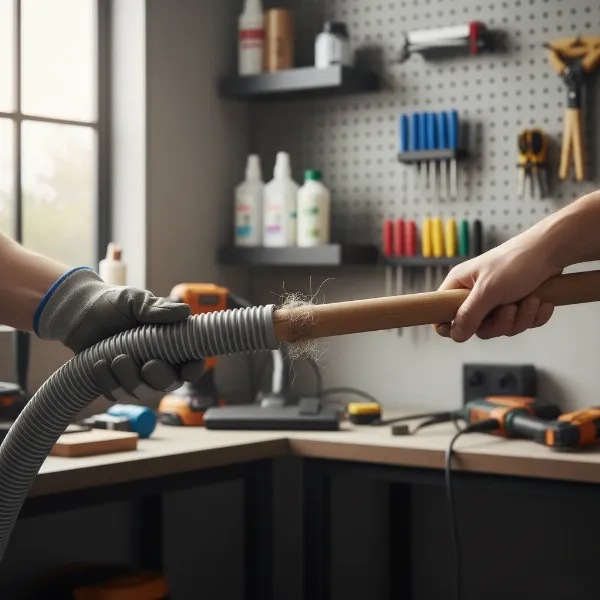 Hands using a broomstick to gently push a clog out of a flexible vacuum cleaner hose.
Using a Bent Wire or Coat Hanger
For clogs that need to be pulled out, a straightened wire coat hanger or a similar bent wire can be effective. Unfurl the coat hanger, leaving a small hook at one end. Carefully feed the straight end into the hose until you reach the clog. Once you’re at the blockage, try to maneuver the hook to grab onto the debris. Then, gently pull the wire back out, bringing the clog with it. Exercise extreme caution with this method to ensure the wire’s end doesn’t scratch or tear the inside of the hose. Avoid sharp points at all costs.
Chemical/Natural Solutions for Stubborn Buildup
Sometimes, clogs aren’t just solid objects but rather sticky buildup or compacted dust that mechanical methods struggle with. For these, a natural cleaning solution can be surprisingly effective.
A mixture of baking soda and white vinegar creates a fizzing reaction that can help break down organic matter and loosen grime. Move your hose into a sink or bathtub. Pour about ½ cup of baking soda into one end of the hose, shaking it to coat the interior. Then, slowly pour ½ cup to 1 cup of white vinegar into the hose. Allow the mixture to fizz and work its magic for 2-3 minutes. This can help dislodge stubborn dirt and sanitize the hose. Alternatively, powdered laundry detergent mixed with hot (not boiling) water can also be effective. After letting the solution sit, rinse the hose thoroughly with water until it runs clear. Ensure the hose is completely dry before reattaching it to the vacuum to prevent mold or mildew growth.
Tools You’ll Need
Gathering the right tools before you start can make the unclogging process much smoother and more efficient.
- Broomstick/Mop Handle/Bamboo Stick: For pushing out solid obstructions.
- Coat Hanger/Bent Wire: For hooking and pulling out stubborn debris (use with caution).
- Baking Soda: A natural abrasive and deodorizer.
- White Vinegar: An acidic cleaner that reacts with baking soda to break down grime.
- Warm Water: For rinsing and, in some cases, with laundry detergent.
- Gloves (Optional): To keep your hands clean, especially when dealing with dirty clogs.
Preventing Future Vacuum Hose Clogs
An ounce of prevention is worth a pound of cure, especially when it comes to vacuum cleaner maintenance. By adopting a few simple habits, you can significantly reduce the likelihood of future hose clogs.
Regularly inspect your vacuum hose for any signs of debris accumulation, even when the vacuum seems to be working fine. Make this a quick check after every few uses. Be mindful of what you’re vacuuming; avoid picking up large objects, liquids, stringy items like long hair or shoelaces, and excessive amounts of fine dust or pet fur in one go. These are common culprits for blockages. Additionally, make sure to empty your dustbin or change your vacuum bag regularly. A full dustbin reduces suction power, making the vacuum more prone to clogs.
When to Call a Professional or Consider Replacement
While most vacuum hose clogs can be resolved with DIY methods, there are instances when professional help or even a replacement might be necessary. If you’ve tried all the recommended techniques and the clog persists, or if you suspect internal damage beyond the hose, it might be time to consult a qualified repair technician. Furthermore, if your hose has visible rips, holes, or significant wear and tear, it may be beyond repair. A damaged hose can lead to air leaks, drastically reducing your vacuum’s suction and efficiency. In such cases, purchasing a replacement hose (or a new vacuum if it’s an older model) is often the most practical solution.
Conclusion
A clogged vacuum hose can bring your cleaning routine to a screeching halt, but with the right approach, it’s a problem you can easily solve yourself. By safely unplugging your machine, carefully inspecting the hose, and employing gentle mechanical methods or natural cleaning solutions, you can restore your vacuum’s powerful suction without causing damage. Remember, regular maintenance and mindful vacuuming habits are key to preventing future blockages, ensuring your vacuum remains a reliable ally in keeping your home spotless. What proactive steps will you take today to keep your vacuum hose clear and your cleaning effortless?
Frequently Asked Questions
How often should I clean my vacuum hose?
It’s a good practice to visually inspect your vacuum hose after every deep clean or once a month, depending on usage. If you notice a reduction in suction or any of the other clog indicators, address it immediately.
Can I use strong chemicals to unclog my vacuum hose?
It is generally not recommended to use strong chemical drain cleaners or harsh bleaches. These can be corrosive and potentially damage the plastic or rubber materials of your vacuum hose, voiding warranties and creating hazardous fumes. Stick to natural solutions like baking soda and vinegar.
What are the common causes of vacuum hose clogs?
Common causes include vacuuming up large debris or objects that are too big for the hose, excessive amounts of hair or pet fur, stringy materials like yarn or shoelaces, and even compacted dust or dirt buildup over time.
Is it safe to use water inside my vacuum hose?
Yes, it is safe to use water (warm, not hot) for cleaning your vacuum hose, especially when using solutions like baking soda and vinegar or laundry detergent. However, ensure the hose is completely detached from the vacuum and fully air-dried before reattaching to prevent electrical hazards or mold growth.