The inviting glow of a crackling fire brings warmth and ambiance to any home, but the lingering aftermath of ash can be a daunting and messy chore. If you’ve ever found yourself wrestling with a broom and dustpan, only to spread more dust than you collect, you know the frustration. Enter the specialized ash vacuum – a dedicated solution designed to transform your fireplace and wood stove cleaning routine from a dusty ordeal into a clean, efficient process. This guide will walk you through everything you need to know about selecting the perfect ash vacuum to keep your hearth pristine and your air clean.
Understanding Ash Vacuums: Beyond the Ordinary Cleaner
An ash vacuum is a purpose-built cleaning appliance designed specifically for removing cooled ash from wood-burning fireplaces, pellet stoves, wood stoves, and even outdoor fire pits and barbecue grills. Unlike a conventional household vacuum or a general-purpose shop vac, an ash vacuum features specialized construction and filtration systems engineered to handle the unique challenges posed by fine ash. Its primary function is to safely and effectively collect minute ash particles without compromising air quality or damaging the cleaning unit itself.
The evolution of ash vacuums stems from the necessity for a safer and more efficient method of hearth cleaning. Traditional methods like sweeping can stir up microscopic ash particles, spreading them throughout your living space, where they can settle on furniture, irritate respiratory systems, and reduce indoor air quality. Ash vacuums were developed to contain this fine particulate matter, ensuring a thorough clean and a healthier home environment.
Ash Vacuums vs. Standard Vacuums & Shop Vacs
It’s tempting to grab your regular household vacuum or a trusty shop vac for ash cleanup, but this common mistake can lead to significant problems, from fire hazards to permanent damage to your equipment. Understanding the fundamental differences is crucial for both safety and effectiveness.
Key Differences:
- Construction Materials: Ash vacuums are built with heat-resistant materials, typically featuring metal tanks, hoses, and wands. This metal construction is vital for safely handling potentially warm ash or embers that might still be present, even after the fire appears to be out. In contrast, standard household vacuums and most shop vacs are largely constructed from plastic, which can melt or ignite when exposed to heat.
- Filtration System: This is arguably the most critical distinction. Ash is incredibly fine, far more so than typical household dust or workshop debris. Standard vacuums and shop vacs often use paper filters or less dense filtration systems that are quickly clogged by ash and allow fine particles to escape through the exhaust, re-polluting your air and creating an even bigger mess. Ash vacuums employ multi-stage filtration, often including a robust pre-filter (like a fiberglass cloth filter) and a high-efficiency particulate air (HEPA) filter. These advanced filters are designed to capture microscopic ash particles, preventing them from recirculating into the room or reaching the motor.
- Motor Design & Protection: The fine nature of ash can quickly burn out the motor of a conventional vacuum if it bypasses inadequate filters. Ash vacuums have motors designed to handle this unique particulate without being damaged, often with superior sealing and protection against dust ingress.
- Safety Features: Many ash vacuums include safety features like cool-touch housings and thermal overload protection to enhance user safety during operation.
Risks of Using a Regular Vacuum for Ash:
- Fire Hazard: The most severe risk is fire. Even seemingly cool ash can harbor hidden embers. When sucked into a plastic-bodied vacuum with other combustible debris (like pet hair or paper), these embers can easily ignite, leading to a house fire.
- Motor Damage: Fine ash rapidly clogs conventional filters, causing the motor to overheat and eventually burn out. This significantly shortens the lifespan of your expensive household vacuum or shop vac.
- Poor Air Quality: Ineffective filtration means ash particles will be expelled back into your home, creating a pervasive dust layer, unpleasant odors, and potential respiratory irritants.
- Inefficient Cleaning: A clogged filter drastically reduces suction power, making ash removal tedious and incomplete. You’ll spend more time and effort for a less satisfactory result.
“Ash vacuums are game changers for homeowners who want a clean and hassle-free way to maintain their fireplaces.” – Rich Mullins, Mechanical Expert & Owner of H2O Plumbing
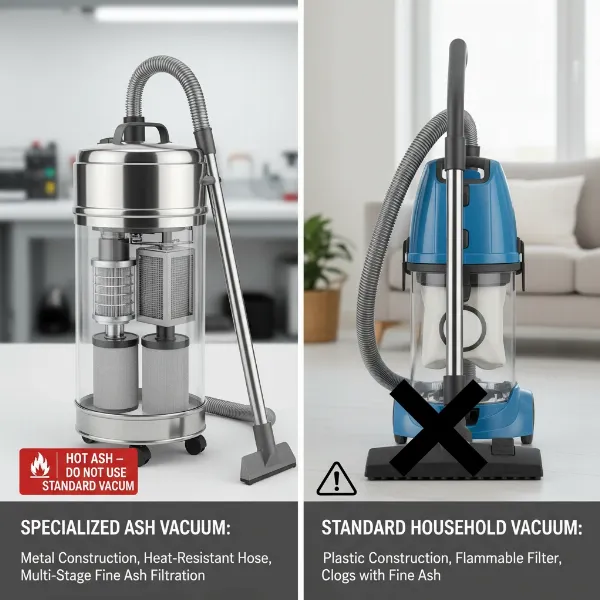 Side-by-side comparison of an ash vacuum and a regular household vacuum, highlighting specialized features.
Types of Ash Vacuums
Ash vacuums come in various designs, each offering distinct advantages depending on your needs.
Corded Ash Vacuums
These are the most common type, offering continuous, powerful suction as long as they are plugged into an electrical outlet.
- Pros: Generally more powerful motors, larger capacities, and consistent performance for extensive cleaning tasks.
- Cons: Limited by cord length, requiring an accessible power outlet.
|
Our Picks for the Best Vacuum cleaner in 2026
As an Amazon Associate I earn from qualifying purchases.
|
||
| Num | Product | Action |
|---|---|---|
| 1 | Bissell CleanView Compact Upright Vacuum, Fits in Dorm Rooms & Apartments, Lightweight with Powerful Suction and Removable Extension Wand, 3508 |

|
| 2 | Eureka NEU10AE5 Powerful Bagless Upright Vacuum Cleaner Carpet and Floor, AirSpeed Ultra-Lightweight Vacuum Cleaner, w/ Replacement Filter, Blue |
|
| 3 | Eureka PowerSpeed NEU181A Upright Vacuum Cleaner For Daily Cleaning for Pet-Owning Households , 5-Height Adjustment-Powerful Suction-Large Dust Cup-Pet Turbo Brush,Suitabe For Carpets & Hard Floors |
|
| 4 | Cordless Vacuum Cleaner, 550W 45kPa 65Mins Vacuum Cleaners for Home with LED Display, Self-Standing Stick Vacuum with Anti-Tangle Brush, Rechargeable Vacuum Cordless for Pet Hair/Carpet/Floor |
|
| 5 | MONSGA Cordless Vacuum Cleaner, 45KPa 400W Stick Vacuum for Home, 50Mins Anti-Tangled Vacuum Cleaner with Charging Dock, Light-weighted Handheld Vacuum for Pet Hair/Carpet/Floor, LED Touch Display,MV3 |
|
| 6 | Shark NV352 Navigator Lift Away Upright Vacuum, Hepa Filter, Anti-Allergen Technology, Swivel Steering, Ideal for Carpet, Stairs, & Bare Floors, with Wide Upholstery & Crevice Tools, Lavender |
|
| 7 | Bissell CleanView Compact Turbo Upright Vacuum with Quick Release Wand, Full Size Power, Compact Size for Apartments & Dorms, 3437F |
|
| 8 | Shark Upright Vacuum, Navigator Lift-Away Deluxe with Large Dust Cup Capacity, HEPA Filter, Swivel Steering, Upholstery Tool & Crevice Tool, Blue, NV360 |
|
| 9 | UNINELL HOME Cordless Vacuum Cleaner, 45,000Pa/450W Stick Vacuum Cleaners for Home, 60 Mins Runtime, Self-Standing, Detachable Battery, Anti-Tangle Brush, Lightweight Wireless Vacuum for Pet Hair |
|
| 10 | Eureka Lightweight Powerful Upright Vacuum Cleaner for Carpet and Hard Floor, PowerSpeed, New Model,Blue,black/New Model |
|
Cordless Ash Vacuums
Powered by rechargeable batteries, these vacuums offer unparalleled freedom of movement.
- Pros: Highly portable and convenient for cleaning areas without nearby power outlets, such as outdoor fire pits or remote cabins. Many are compatible with existing battery systems from major tool brands.
- Cons: Limited run-time based on battery life, potentially less powerful suction than corded models, and typically smaller capacities.
Specialized Models
Some ash vacuums are designed with specific appliances in mind. For instance, certain models for pellet stoves may feature unique hose designs to navigate tight spaces and effectively clean pellet residue.
Essential Features to Consider When Buying an Ash Vacuum
Choosing the right ash vacuum involves evaluating several key features that impact performance, safety, and convenience.
Suction Power & Motor
The effectiveness of an ash vacuum hinges on its ability to generate strong suction without clogging. Look for models with robust motors, often rated at 500 watts or higher, or 4-5 amps, to ensure efficient ash collection. Higher power ratings are beneficial if you regularly clean large quantities of ash or deal with caked-on residue.
Filtration System
This is a non-negotiable feature for ash vacuums. A multi-stage filtration system is paramount to prevent fine ash particles from escaping.
- HEPA Filters: Essential for trapping microscopic particles (as small as 0.3 microns), ensuring cleaner exhaust air and protecting against allergens.
- Pre-filters: Often made of fiberglass cloth, these capture larger ash particles before they reach the HEPA filter, extending the life of the main filter and maintaining suction.
- Washable Filters: Filters that can be rinsed and reused offer cost savings and convenience.
- Pneumatic Filter Shakers: Some advanced models include a button-activated mechanism that shakes the filter, dislodging accumulated ash and restoring suction without manual intervention.
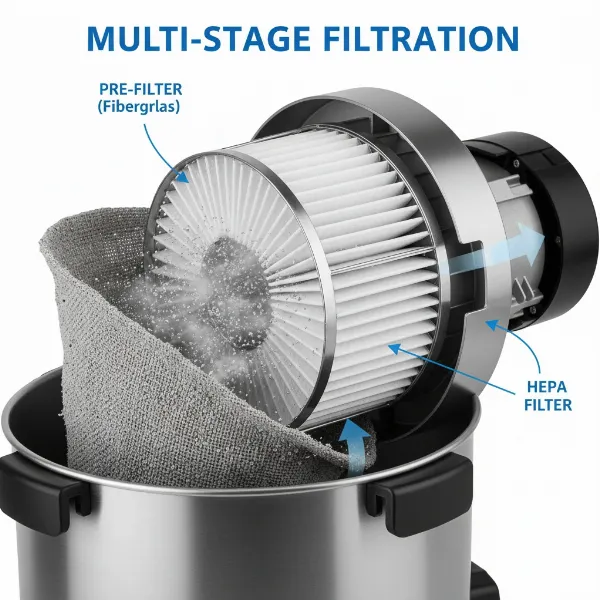 Detailed view of an ash vacuum's multi-stage filtration system, including HEPA and pre-filters for ash.
Capacity
Ash vacuums typically range in capacity from 3 to 16 gallons. Your choice should align with the frequency of use and the volume of ash generated.
- Smaller Capacity (3-5 gallons): Suitable for occasional users or smaller fireplaces.
- Larger Capacity (5+ gallons): Ideal for frequent users, larger wood stoves, or those who prefer less frequent emptying.
Construction & Durability
Given the harsh environment of ash cleanup, robust construction is vital.
- Metal Tanks: Stainless steel tanks are durable, heat-resistant, and won’t corrode from ash.
- Metal Hoses and Wands: Essential for safely handling ash and providing longevity, preventing melting or damage from heat.
Hose & Attachments
A well-designed hose and appropriate attachments enhance cleaning efficiency.
- Hose Length: A longer hose offers greater reach and flexibility, reducing the need to move the vacuum frequently.
- Specialized Nozzles: Crevice tools and brushes can help reach tight corners and dislodge stubborn ash.
Portability & Design
Consider how easily you can move and store the vacuum.
- Wheels and Handles: For larger units, sturdy wheels and ergonomic handles make transportation much easier.
- Lightweight Design: For smaller or handheld models, a lightweight design improves maneuverability, especially for quick cleanups.
Noise Level
While not always a primary concern for garage or outdoor use, a quieter ash vacuum (around 60 dB) can be a significant advantage for indoor use, making the cleaning process less disruptive.
Safety Features
Always prioritize safety.
- Cool-Touch Housing: Prevents accidental burns if the exterior becomes warm.
- Thermal Overload Protection: Automatically shuts off the motor if it overheats, preventing damage.
- Always Vacuum Cool Ash: Regardless of the vacuum’s heat resistance, it is safest and highly recommended to only vacuum ash that has completely cooled, typically after 12-24 hours.
Top-Rated Ash Vacuums on the Market
While specific models and ratings can change, several brands consistently receive high marks for their ash vacuums. These brands often excel in different aspects, offering choices for various needs and budgets.
- Bacoeng ASH200L: Often praised as a robust, versatile option with strong suction and a good capacity, suitable for various heating appliances, from fireplaces to pellet smokers.
- PowerSmith PAVC101: A popular choice for its balance of performance, affordability, and effective HEPA filtration, often recommended as an excellent overall value.
- Snow Joe ASHJ201: Known for being a reliable and budget-friendly option, offering decent suction and capacity for regular home use.
- Love-less Ash Cougar+: Highly regarded for specialized cleaning, particularly for pellet stoves, often featuring unique hose designs for efficient ash removal in challenging areas.
- Craftsman 17585: Noted for its durability and versatility, capable of handling cool ashes and fine particles from various heating sources. It often includes a non-stick coated HEPA filter.
- ApexPower Cordless Ash Vacuum: A strong contender in the cordless category, offering portability, dual HEPA filters, and often compatibility with popular battery platforms like DeWalt 20V Max.
When considering a purchase, researching the latest reviews and comparing specifications of these and other reputable brands will help you find the best fit.
Maintenance Tips for Your Ash Vacuum
Proper maintenance is essential to ensure your ash vacuum operates efficiently, safely, and for many years to come.
- Empty Regularly: Do not wait for the tank to be completely full. Empty the ash into a suitable, sealed, non-combustible container after each significant use to maintain optimal suction and prevent messy overflows.
- Clean Filters Frequently: The filters are the heart of your ash vacuum.
- Tapping: After each use, remove the filters and gently tap them over a trash can to dislodge accumulated ash.
- Washing (if applicable): If your filters are washable, rinse them under clean running water using a mild detergent. Avoid harsh chemicals or vigorous scrubbing, which can damage the filter material.
- Drying: Always allow washable filters to air dry completely (typically 24 hours) before reinstalling them. Using a wet filter can damage the vacuum.
- Replacement: Over time, filters will wear out or become permanently clogged. Replace them according to the manufacturer’s recommendations.
- Wipe Down Exterior: Periodically wipe the exterior of the vacuum and its components with a damp cloth to keep it free of dust and debris.
- Inspect Hose and Attachments: Check the hose and nozzles for any blockages or damage. Clear any obstructions to maintain airflow.
- Consult User Manual: Always refer to your specific model’s user manual for detailed cleaning and maintenance instructions, as procedures can vary between brands.
Conclusion
Cleaning your fireplace or wood stove doesn’t have to be a dusty, health-compromising chore. Investing in a specialized ash vacuum is a smart choice for any homeowner who uses wood-burning appliances. These purpose-built machines offer superior safety, efficiency, and cleanliness compared to standard household vacuums or shop vacs, thanks to their heat-resistant construction, powerful motors, and advanced multi-stage filtration systems. By understanding the key features, choosing a reputable brand, and following simple maintenance practices, you can enjoy a beautifully clean hearth and healthier indoor air. Take control of your ash cleanup and embrace the ease and effectiveness an ash vacuum brings to your home.
What difference will a dedicated ash vacuum make in your home?
Frequently Asked Questions
Can I use a regular shop vac for ash cleanup?
No, it is strongly advised against using a regular shop vac for ash cleanup. Shop vacs are not designed with heat-resistant components or fine particle filtration systems necessary for safely handling ash. This can lead to fire hazards if hot embers are present, severe damage to the vacuum’s motor, and the release of fine ash particles back into your home’s air.
How cool should the ash be before vacuuming?
For maximum safety, ash should be completely cool before vacuuming. This typically means allowing at least 12-24 hours after the last fire to ensure no hot embers remain. While some ash vacuums can handle “warm” ash (below 104°F/40°C), always err on the side of caution and verify the ash temperature with metal fireplace tools.
How often should I clean my ash vacuum’s filter?
It is recommended to clean your ash vacuum’s filter after each significant use to maintain optimal suction and prolong the filter’s life. For washable filters, follow the manufacturer’s instructions, ensuring the filter is completely dry before reinstallation. Regular cleaning prevents clogging and ensures consistent performance.
What kind of filter does an ash vacuum use?
Ash vacuums typically use multi-stage filtration systems designed to capture extremely fine ash particles. This often includes a durable pre-filter (such as a fiberglass cloth filter) to catch larger debris and a high-efficiency particulate air (HEPA) filter to trap microscopic particles as small as 0.3 microns, preventing them from escaping back into the air.